
🎲 Small Games, Big Thinking
How Short Play Sessions Shape Problem-Solving Skills


Introduction
Not every meaningful moment needs an hour.
Sometimes, ten minutes is enough.
In busy households, play often feels like something we need to schedule.
But children don’t grow their thinking skills only during long, planned activities.
They grow them in small pauses.
Between dinner and bath time.
Before leaving the house.
Right after a question sparks curiosity.
That’s where small games quietly do their work.
1. Short Games Lower the Barrier to Thinking
Long games can feel heavy.
Rules to remember, time to commit, energy to maintain.
Short games invite participation instead of resistance.
They say, “Let’s try,” not “Let’s prepare.”
When the barrier is low, children engage more freely and think more boldly.
2. Fast Decisions Train Flexible Minds
Quick games often require:
-
Choosing between limited options
-
Predicting simple outcomes
-
Adjusting plans when things change
These moments build cognitive flexibility, the ability to adapt thinking rather than follow one fixed path.
Children learn that changing their mind is not failure.
It’s strategy.
3. Repetition Without Boredom
Short play sessions repeat naturally.
A game played today might be played again tomorrow, and again next week.
Each time, the child notices something new.
Repetition strengthens thinking, but brevity keeps it light.
No pressure. No burnout.
4. Play That Fits Real Life
Thinkie believes learning should fit into life, not interrupt it.
Small games:
-
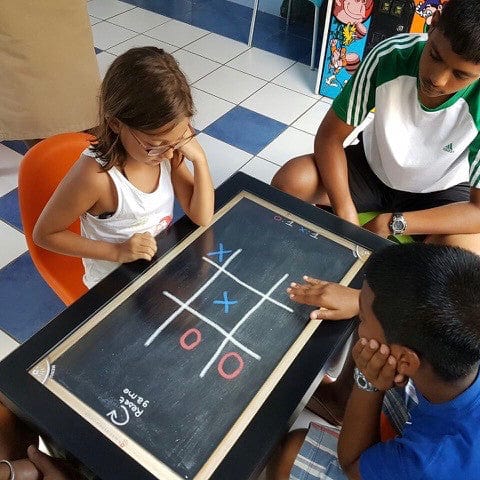
Fit on the kitchen table
-
End before attention fades
-
Leave room for conversation
They don’t compete with daily routines.
They blend into them.
Closing Thoughts
Big thinking doesn’t always need big time.
Sometimes, it starts with a small game,
played casually,
ended easily,
remembered quietly.
That’s how thinking becomes a habit.